
Legendary Designer Calls New Jaguar EV Design a “Great Tragedy”
Jaguar is in the middle of a radical reinvention, betting its entire future on a new-look, all-electric lineup designed to compete with the world’s most exclusive luxury brands. But just as the first glimpse of this new direction has been revealed, one of the most respected car designers in the world, Frank Stephenson, has delivered a scathing critique, calling the new design language lazy, anonymous, and a “great tragedy” for the iconic British brand.
What is Jaguar’s New Design Direction?
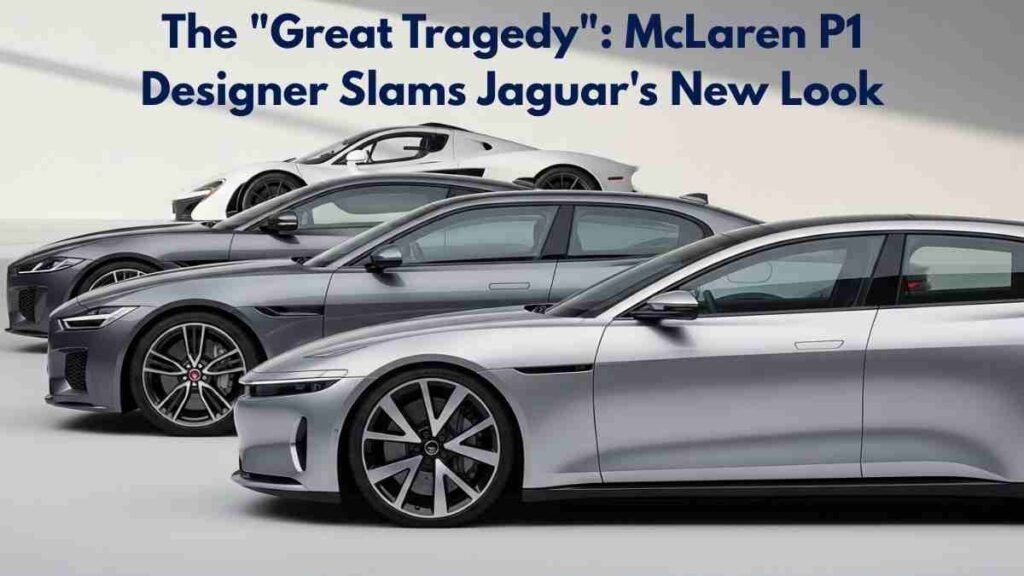
Jaguar Land Rover (JLR) is pushing Jaguar far upmarket, transforming it into a super-luxury, all-electric brand. To do this, they are consciously moving away from the classic design DNA that defined the brand for decades—the long hoods, sensual curves, and feline-like grace of cars like the E-Type. The new direction, teased in recent images, embraces a minimalist, almost generic EV aesthetic with clean surfaces and sharp lines, aiming for a futuristic and clean-slate look. The goal is to shed the past and create something entirely new.
Why Frank Stephenson’s Opinion Matters
Frank Stephenson is not just any critic; he is a legend in the automotive design world. As the designer behind modern icons like the reborn Mini, the Fiat 500, the Maserati MC12, and the McLaren P1, his opinion carries immense weight. When he speaks, the industry listens. His harsh criticism of Jaguar’s new direction is a major red flag.
Here’s why he believes Jaguar has lost its way:
-
Loss of Brand Identity: Stephenson argues the new design lacks any recognizable Jaguar DNA. It could have a badge from any number of new EV brands.
-
“Lazy” and Uninspired Design: He specifically calls out the car’s simple, straight side profile line as “the laziest way to do a car,” devoid of emotion or muscularity.
-
Looks Like the Competition: He points out that the new look is derivative, resembling vehicles from Polestar, Lucid, and various Chinese EV startups.
-
No Story or Emotion: Great car design tells a story. Stephenson feels the new Jaguar is soulless, failing to evoke the passion and character the brand was known for.
A Deep Dive into the Critique: Losing the “Jaguar-ness”
Frank Stephenson’s core argument, shared in a recent YouTube video, is that Jaguar has abandoned its most valuable asset: its identity.
Case Study: The Side Profile
Stephenson focuses on a teaser image showing the car’s profile. He notes that the single, unbroken line running from the front to the back is simplistic and uninspired. A classic Jaguar, he explains, has a sense of tension and muscle, with lines that suggest the car is ready to pounce, like the animal it’s named after. The new design, by contrast, is static and emotionless. He famously said, “If you’re going to call your car company Jaguar, the car damn well better look like a Jaguar, or at least have the characteristics of that animal.”
He believes this minimalist approach fails to stand out in a market already crowded with sleek, minimalist EVs. Instead of leading, Jaguar now appears to be following a trend, which is a dangerous move for a brand trying to establish itself in the ultra-luxury space.
What’s Next for Jaguar? A High-Stakes Gamble
Jaguar is taking a monumental risk. By severing ties with its celebrated design past, the company is betting that a new generation of luxury EV buyers wants a clean, modern look, untethered by heritage. However, Stephenson’s critique voices a fear shared by many brand loyalists: that in its quest for a new future, Jaguar might be erasing its soul. The big question is whether this minimalist reinvention will be seen as bold and forward-thinking or as a “great tragedy” that dissolved one of the most beloved design languages in automotive history.
Jaguar is at a crossroads, banking its future on a radical new design. While the company sees it as a necessary rebirth, a legendary designer like Frank Stephenson sees it as a loss of identity. His critique is a powerful reminder that in the world of luxury goods, a brand’s heritage and emotional connection are often just as important as its future vision. Only time will tell if Jaguar’s gamble will pay off or if it has designed itself into anonymity.